Spain’s architectural heritage is one of Europe’s richest and certainly its most diverse, due in large part to the dual influences of European Christian and Islamic styles during the eight centuries of Moorish presence in the peninsula. Another factor is economic: both during the Reconquista and in the wake of the discovery of the Americas, money seemed limitless and vast building projects were undertaken. Entire treasure fleets were spent in erecting lavish churches and monasteries on previously Muslim soil, while the relationships with Islamic civilization spawned some fascinating styles unique to Spain. The Moors adorned their towns with sensuous palaces, such as Granada’s Alhambra, and elegant mosques, as well as employing compact climate-driven urban planning that still forms the hearts of most towns. In modern times Spain has shaken off the ponderous monumentalism of the Franco era and become something of a powerhouse of modern architecture.
Andalucía’s finest early stone structures are in Antequera, whose dolmens are extraordinarily monumental burial spaces built from vast slabs of stone. The dwellings of the period were less permanent structures of which little evidence remains, except at the remarkable site of Los Millares near Almería, a large Chalcolithic settlement, necropolis, and sophisticated associated fortifications that has provided valuable information about society in the third millennium BC. The first millennium BC saw the construction of further fortified settlements, usually on hilltops. Little remains of this period in Andalucía, as the towns were then occupied by the Romans and Moors.
Similarly, while the Phoenicians established many towns in southern Spain, their remains are few; they were so adept at spotting natural harbours that nearly all have been in continual use ever since, leaving only the odd foundations or breakwater. There are also few Carthaginian remains of note. Their principal base in Andalucía was Cádiz, but two millennia of subsequent occupation have taken their toll on the archaeological record.
The story of Spanish architecture really begins with the Romans, who colonized the peninsula and imposed their culture on it to a significant degree. More significant still is the legacy they left; architectural principles that endured and to some extent formed the basis for later peninsular styles.
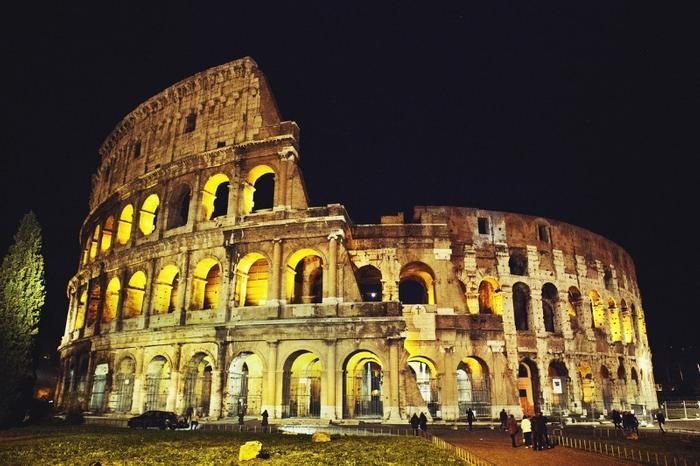
There’s not a wealth of outstanding monuments; Itálica, just outside Sevilla, and Baelo Claudia, on the Costa de la Luz, are impressive, if not especially well-preserved Roman towns. Acinipo, near Ronda, has a large and spectacularly sited theatre, Carmona has a beautifully excavated necropolis and Almuñécar has the ruins of its fish sauce factory on display. In many towns and villages you can see Roman fortifications and foundations under existing structures.
There are few architectural reminders of the Visigothic period, although it was far from a time of lawless barbarism. Germanic elements were added to Roman and local traditions and there was widespread building; the kings of the period commissioned many churches, but in Andalucía these were all demolished to make way for mosques.
The first distinct period of Moorish architecture in Spain is that of the Umayyads ruling as emirs, then as caliphs, from Córdoba from the eighth to 11th centuries. Although the Moors immediately set about building mosques, the earliest building still standing is Córdoba’s Mezquita. Dating from the late ninth century, the ruined church at the mountain stronghold of Bobastro exhibits clear stylistic similarities with parts of the Mezquita and indicates that already a specifically Andalusi architecture was extant.
The period of the caliphate was the high point of Al-Andalus and some suitably sumptuous architecture remains. Having declared himself caliph, Abd al-Rahman III had the palace complex of Madinat az-Zahra built just outside of Córdoba. Now in ruins, excavation and reconstruction have revealed some of the one-time splendour, particularly of the throne room, which has arcades somewhat similar to those of the Mezquita and ornate relief designs depicting the Tree of Life and other vegetal motifs. The residential areas are centred around courtyards, a feature of Roman and Moorish domestic architecture that persists in Andalucía to this day.
The Mezquita had been added to by succeeding rulers, who enlarged it but didn’t stray far from the original design. What is noticeable is a growing ornamentality, with use of multi-lobed arches, sometimes interlocking, and blind arcading on gateways. The mihrab was resituated and topped with a recessed dome, decorated with lavish mosaic work, possibly realized by Byzantine craftsmen. A less ornate mosque from this period can be seen in a beautiful hilltop setting at Almonaster la Real in the north of Huelva province.
Many defensive installations were also put up at this time: the castles of Tarifa and Baños de la Encina mostly date from this period. Bathhouses such as those of Jaén were also in use, although were modified in succeeding centuries. The typical Moorish hammam had a domed central space and vaulted chambers with star-shaped holes in the ceiling to admit natural light.
The taifa period, although politically chaotic, continued the rich architectural tradition of the caliphate. Málaga’s Alcazaba preserved an 11th-century pavilion with delicate triple arches on slender columns. Elaborate stucco decoration, usually with repeating geometric or vegetal motifs, began to be used commonly during this time.
The Almoravids contributed little to Andalucían architecture, but the Almohads brought their own architectural modifications with them. Based in Sevilla, their styles were not as flamboyant and relied heavily on ornamental brickwork. The supreme example of the period is the Giralda tower that once belonged to the Mosque in Sevilla and now forms part of the cathedral. The use of intricate wood-panelled ceilings began to be popular and the characteristic Andalucían azulejo decorative tiles were first used at this time. Over this period the horseshoe arch developed a point. The Almohads were great military architects and built or improved a large number of walls, fortresses and towers; these often have characteristic pointed battlements. The Torre del Oro in Sevilla is one of the most famous and attractive examples.
The climax of Moorish architecture ironically came when Al-Andalus was already doomed and had been reduced to the emirate of Granada. Under the Nasrid rulers of that city the sublime Alhambra was constructed; a palace and pleasure garden that took elegance and sophistication in architecture to previously unseen levels. Nearly all the attention was focused on the interior of the buildings, which consisted of galleries and courtyards offset by water features and elegant gardens. The architectural high point of this and other buildings is the sheer intricacy of the stucco decoration in panels surrounding the windows and doorways. Another ennobling feature is mocárabes, a curious concave decoration of prisms placed in a cupola or ceiling and resembling natural crystal formations in caves. The Alcázar in Sevilla is also a good example of the period, though actually constructed in Christian Spain; it is very Nasrid in character and Granadan craftsmen certainly worked on it.
As the Christians gradually took back Andalucía, they introduced their own styles, developed in the north with substantial influence from France and Italy. The Romanesque barely features in Andalucía; it was the Gothic style that influenced post-Reconquista church building in the 13th, 14th and 15th centuries. It was combined with styles learned under the Moors to form an Andalucían fusion known as Gothic-mudéjar. Many of the region’s churches are constructed on these lines, typically featuring a rectangular floor plan with a triple nave surrounded by pillars, a polygonal chancel and square chapels. Gothic exterior buttresses were used and many had a bell tower decorated with ornate brickwork reminiscent of the Giralda, which was also rebuilt during this period.
The Andalucían Gothic style differs from the rest of the peninsula in its basic principles. Whereas in the north, the ‘more space, less stone, more light’ philosophy pervaded, practical considerations demanded different solutions in the south. One of these was space; the cathedrals normally occupied the site of the former mosque, which had square ground plans and were hemmed in by other buildings. Another was defence – on the coast in particular, churches and cathedrals had to be ready to double as fortresses in case of attack, so sturdy walls were of more importance than stained glass. The redoubt of a cathedral at Almería is a typical example. Many of Andalucía’s churches, built in the Gothic style, were heavily modified in succeeding centuries and present a blend of different architectures.
Mudéjar architecture spread quickly across Spain. Moorish architects and those who worked with them began to meld their Islamic tradition with the northern influences. The result is distinctive and pleasing, typified by the decorative use of brick and coloured tiles, with tall elegant bell towers a particular highlight. Another common feature is the highly elaborate wooden panelled ceilings, some of which are masterpieces. The word artesonado describes the most characteristic type of these. The style became popular nationwide; in certain areas, mudéjar remained a constant feature for over 500 years of building.
The final phase of Spanish Gothic was the Isabelline, or Flamboyant. Produced during and immediately after the reign of the Catholic Monarchs (hence the name), it borrowed decorative motifs from Islamic architecture to create an exuberant form characterized by highly elaborate façades carved with tendrils, sweeping curves and geometrical patterns. The Capilla Real in Granada is an example and the Palacio de Jabalquinto in Baeza is a superb demonstration of the style.
The 16th century was a high point in Spanish power and wealth, when it expanded across the Atlantic, tapping riches that must have seemed limitless. Spanish Renaissance architecture reflected this, leading from the late Gothic style into the elaborate peninsular style known as Plateresque. Although the style originally relied heavily on Italian models, it soon took on specifically Spanish features. The word refers particularly to the façades of civil and religious buildings, characterized by decoration of shields and other heraldic motifs, as well as geometric and naturalistic patterns such as shells. The term comes from the word for silversmith, platero, as the level of intricacy of the stonework approached that of jewellery. Arches went back to the rounded and columns and piers became a riot of foliage and ‘grotesque’ scenes.
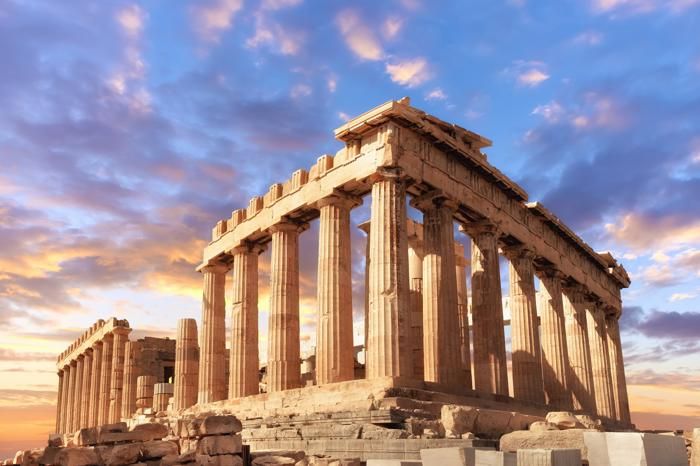
A classical revival put an end to much of the elaboration, as Renaissance architects concentrated on purity. To classical Greek features such as fluted columns and pediments were added large Italianate cupolas and domes. Spanish architects were apprenticed to Italian masters and returned to Spain with their ideas. Elegant interior patios in palacios are an especially attractive feature of the style, to be found across the country. Andalucía is a particularly rich storehouse of this style, where the master Diego de Siloé designed numerous cathedrals and churches. The palace of Carlos V in the Alhambra grounds is often cited as one of the finest examples of Renaissance purity. One of Diego de Siloé’s understudies, Andrés de Vandelvira, evolved into the über-architect of the Spanish Renaissance. The ensemble of palaces and churches he designed in Jaén province, particularly in the towns of Ubeda and Baeza, are unsurpassed in their sober beauty. Other fine 16th-century palacios can be found in nearly every town and city of Andalucía; often built in honey-coloured sandstone, these noble buildings were the homes of the aristocrats who had reaped the riches of the Reconquista and the new trade routes to the Americas.
The pure lines of this Renaissance classicism were soon to be transformed into a new style, Spanish Baroque. Although it started fairly soberly, it soon became rather ornamental, often being used to add elements to existing buildings. The Baroque was a time of great genius in architecture as in the other arts in Spain, as masters playfully explored the reaches of their imaginations; a strong reaction against the sober preceding style. Churches became ever larger, in part to justify the huge façades, and nobles indulged in one-upmanship, building ever-grander palacios. The façades themselves are typified by such features as pilasters (narrow piers descending to a point) and niches to hold statues. Andalucía has a particularly vast array of Baroque churches; Sevilla in particular bristles with them, while Cádiz cathedral is almost wholly built in this style. Smaller towns, such as Priego de Córdoba and Ecija, are also well endowed, as they both enjoyed significant agriculture-based prosperity during the period.
The Baroque became more ornate as time went on, reaching the extremes of Churrigueresque, named for the Churriguera brothers who worked in the late 17th and early 18th centuries. The result can be overelaborate but on occasion transcendentally beautiful. Vine tendrils and cherubs decorate façades and retablos, which seem intent on breaking every classical norm, twisting here, upside-down there and at their best seeming to capture motion.
Neoclassicism, encouraged by a new interest in the ancient civilizations of Greece and Rome, was an inevitable reaction to such joie de vivre. It again resorted to the cleaner lines of antiquity, which were used this time for public spaces as well as civic and religious buildings. Many plazas and town halls in Spain are in this style, which tended to flourish in the cities that were thriving in the late 18th and 19th centuries, such as Cádiz, whose elegant old town is largely in this style. The best examples use symmetry to achieve beauty and elegance, such as the Prado in Madrid, or Sevilla’s tobacco factory, which bridges Baroque and neoclassical styles.
The late 19th century saw Catalan modernista architecture break the moulds in a startling way. At the forefront of the movement was Antoni Gaudí. Essentially a highly original interpretation of art nouveau, Gaudí’s style featured naturalistic curves and contours enlivened with stylistic elements inspired by Muslim and Gothic architecture. There is little modernista influence in Andalucía, but more sober fin de siècle architecture can be seen in Almería, which was a prosperous industrial powerhouse at the time.
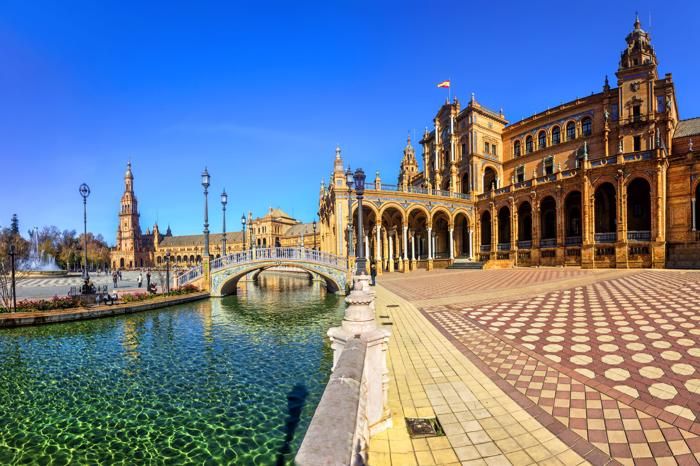
Awakened interest in the days of Al-Andalus led to the neo-Moorish (or neo-mudéjar) style being used for public buildings and private residences. The most evident example of this is the fine ensemble of buildings constructed in Sevilla for the 1929 Ibero-American exhibition. Budgets were thrown out the window and the lavish pavilions are sumptuously decorated. Similarly ornate is the theatre in Cádiz.
Elegance and whimsy never seemed to play much part in fascist architecture and during the Franco era Andalucía was subjected to an appalling series of ponderous concrete monoliths, all in the name of progress. A few avant-garde buildings managed to escape the drudgery from the 1950s on, but it was the dictator’s death in 1975, followed by EEC membership in 1986, that really provided the impetus for change.
Andalucía is not at the forefront of Spain’s modern architectural movements, but the World Expo in Sevilla in 1992 brought some of the big names in. Among the various innovative pavilions, Santiago Calatrava’s sublime bridges stand out. The impressive Teatro de la Maestranza and public library also date from this period, while the newer Olympic stadium, and Málaga’s Picasso Museum and Centro de Arte Contemporáneo – both successful adaptations of older buildings – are more recent offerings. Elsewhere, the focus has been on softening the harsh Francoist lines of the cities’ 20th-century expansions. In most places this has been quietly successful. Much of the coast, however, is still plagued by the concrete curse, where planning laws haven’t been strict enough in some places, and have been circumvented with a well-placed bribe in others.